Terraform, CloudFormation, and Cloud Migration Tools That Move Workloads Safely

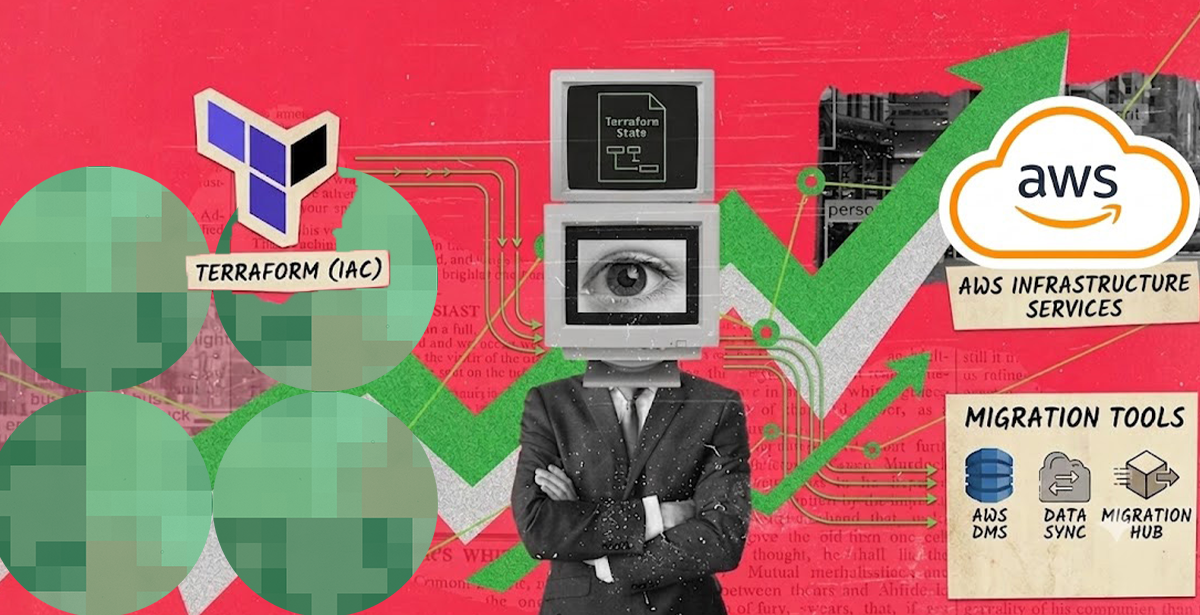
infrastructure to the cloud. Modern migration initiatives require repeatability, governance, security, and minimal disruption to business operations.
As environments grow more complex, manual migration approaches introduce unnecessary risk, configuration drift, and deployment inconsistencies that can delay projects and increase costs.
This is where infrastructure automation and cloud migration tooling become essential.
Solutions such as Terraform and AWS CloudFormation enable organizations to define infrastructure as code, standardize deployments, and create predictable migration workflows across environments.
Combined with specialized cloud migration tools, they help teams move workloads with greater control, maintain compliance requirements, and reduce the likelihood of downtime during transition.
If you’re interested in learning about how modern cloud migration tools work together to support safe, scalable workload migrations, this page is for you.
💡Before starting a cloud migration, assess whether the move will deliver measurable business value—not just technical modernization. Evaluate application dependencies, performance requirements, security constraints, operational costs, and scalability goals to determine migration readiness. Working with an experienced cloud migration services can help identify the right migration strategy, avoid costly rework, and ensure workloads are moved securely with minimal disruption.
What Cloud Migration Solutions Actually Need to Do
About 94% of enterprises now use cloud infrastructure in some form. Most organizations have moved past whether to migrate. The question now is how to move stateful, complex workloads without breaking production.
Good cloud migration software handles three jobs –
- It provisions infrastructure consistently.
- It tracks deployment state, knowing exactly what was deployed and in what configuration
- It enables repeatable, auditable changes that don’t require heroic manual intervention.
IaC tools are the mechanism that makes all three possible. Every resource is declared in version-controlled code. Changes are reviewed, tested, and applied through a repeatable pipeline rather than manual console clicks.
Without this foundation, migrations become a series of one-off steps. Each environment diverges. Every rollback requires guesswork. That’s the pattern IaC breaks.
Terraform: The Multi-Cloud IaC Standard
Terraform is the most widely adopted infrastructure as code tool outside of AWS-native stacks. It uses HashiCorp Configuration Language, which is readable, version-controlled, and provider-agnostic.
As of 2026, Terraform supports over 3,000 providers. That includes AWS, Azure, GCP, Cloudflare, Datadog, GitHub, and hundreds more. Teams can manage every layer of a multi-cloud environment through a single codebase.
Terraform Cloud adds remote state management, policy as code, and team collaboration on top of the open-source CLI. It’s the natural upgrade path when infrastructure complexity grows beyond a single team.
The tradeoff is state management overhead. Teams must configure a remote backend, typically S3 with DynamoDB for locking, and maintain the binary. For teams new to IaC, that adds a real learning curve.
DPL configures Terraform backends as a standard part of every migration engagement. That initial overhead pays back quickly in deployment consistency.
CloudFormation vs Terraform: When AWS-Native Wins
AWS CloudFormation takes a different approach. It is tightly integrated with AWS, fully managed, and free to use. State is managed by AWS itself, with no backend to configure.
The advantages are real. New AWS services get CloudFormation support on day one, before third-party providers update their coverage. IAM integration is native and deep.
For teams operating entirely within AWS, the CloudFormation vs Terraform decision often resolves in CloudFormation’s favor. The operational simplicity is genuine.
Where CloudFormation falls short is portability. If workloads span Azure, GCP, or SaaS tools needing infrastructure-level integration, CloudFormation’s AWS-only scope becomes a hard ceiling.
When DPL built the nGAGE serverless SaaS platform, automated tenant provisioning ran through CloudFormation alongside AWS Step Functions. That was the right choice for a fully AWS-native architecture. It cut tenant onboarding from 2 days to under 5 minutes.
The Full Migration Stack: Beyond Infrastructure as Code
Terraform and CloudFormation handle provisioning. A complete migration stack goes deeper.
Discovery comes first. AWS Migration Hub and Application Discovery Service catalog workloads and surface dependencies before anything moves. Skipping this step is the most common cause of migration surprises.
Data migration is its own discipline. AWS Database Migration Service handles schema conversion and continuous replication. Oracle GoldenGate manages bidirectional sync for complex on-premises-to-cloud scenarios.
CI/CD pipelines lock in the new state. The right CI/CD tools for your team determine how fast this comes together. GitLab CI/CD, AWS CodePipeline, and Jenkins push every change through automated testing before it touches production.
💡When selecting CI/CD tools, match the platform to your team’s maturity level rather than choosing the most feature-rich option available. Early-stage teams often benefit from simpler, integrated CI/CD tools that accelerate adoption, while mature engineering organizations typically require advanced automation, governance, security controls, and multi-environment orchestration to support scale and complexity.
Security tooling wraps the whole stack. AWS WAF, GuardDuty, and Security Hub enforce policy at the infrastructure layer. HashiCorp Vault handles secrets. This layer is non-negotiable for regulated industries.
Monitoring and observability close the loop. Prometheus, Grafana, and Amazon CloudWatch surface issues before they become outages. Without visibility into the migrated environment, teams are reacting rather than preventing.
What Safe Migration Actually Looks Like
The cloud migrations that succeed share a common pattern: structured tooling paired with a phased execution plan.
DPL’s work with National Janitorial Solutions illustrates this at scale. The engagement modernized infrastructure processing 500,000+ work orders annually across 50 US states. The outcome included 99.95% availability and SOC 2 Type II certification. Deployment time dropped from four hours to under one minute.
The foundation was Terraform-managed infrastructure, Amazon ECS, and AWS CodePipeline running a fully automated CI/CD pipeline. Every change was versioned, tested, and reversible before it reached production.
Recent data confirms the pattern. 65% of cloud migrations now complete on time and within budget, up from 54% in 2022. Better cloud migration tools are the primary driver of that improvement.
Choosing the Right Cloud Migration Tools for Your Stack
The choice between Terraform and CloudFormation is rarely absolute. It depends on cloud footprint, team maturity, and compliance requirements.
Multi-cloud or hybrid architectures favor Terraform’s provider breadth. AWS-only environments with tight operational constraints benefit from CloudFormation’s managed state. Most mature teams use both, choosing by service.
💡Cloud migration tooling delivers value only when paired with a strategy that accounts for application dependencies, security requirements, and rollback planning. A lift-and-shift cloud modernization approach may move workloads to the cloud, but it does not modernize them. Long-term success depends on the optimization, automation, and architectural improvements implemented after migration.
Need an Experienced Tech Partner to Guide You?
Successful cloud migrations are driven by strategy, not just technology.
While tools can automate and accelerate the process, their effectiveness depends on a clear understanding of workload requirements, business objectives, security considerations, and operational dependencies.
Organizations that approach migration as a broader transformation initiative—not simply an infrastructure move—are better positioned to achieve scalability, resilience, and long-term cloud value.
DPL’s cloud migration consulting services cover the full stack, from initial architecture design through post-migration optimization.
If you’re assessing cloud migration solutions for a complex workload, start with what you’re moving and why. The tool selection follows naturally from that.