AWS DevOps Consulting: Architecting CI/CD on Amazon’s Stack

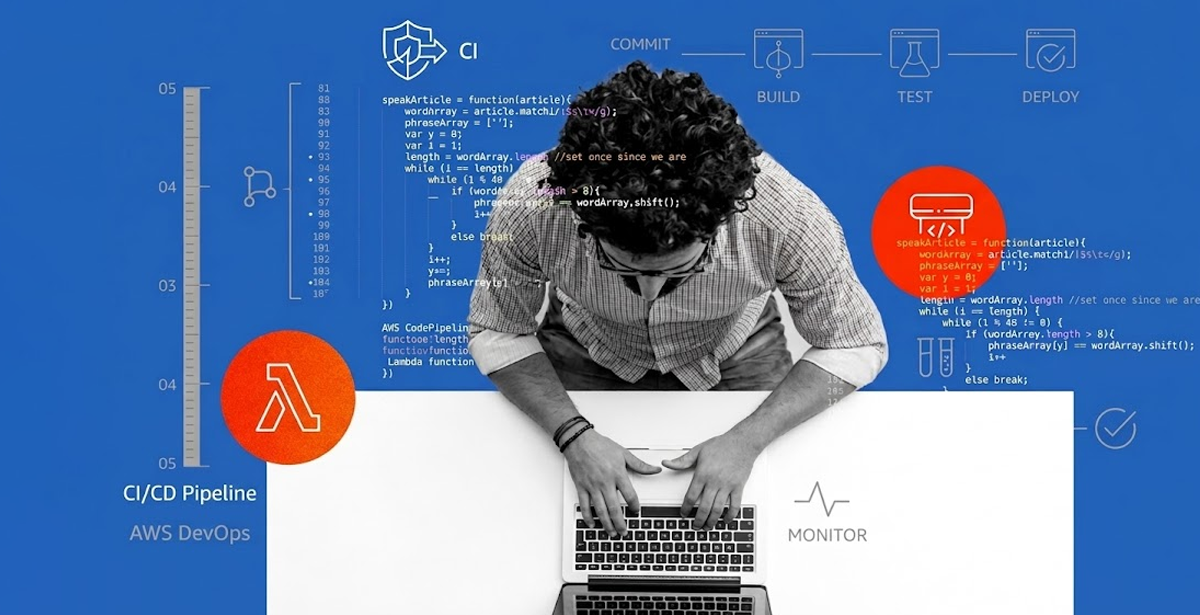
Most engineering teams struggle with effectively using AWS. Pipelines duct-taped together. Infrastructure provisioned by hand. Deployments that still require a developer to stand by and watch.
This is what AWS DevOps consulting is built to fix — not just connecting services, but designing a delivery system that works without human intervention.
If you’re a little new to all of this, read on to discover everything there is to it.
Why DIY Pipelines on AWS Break Down
AWS has native CI/CD tooling: CodePipeline, CodeBuild, and CodeDeploy. It is powerful. But native tooling does not equal good architecture.
Without intentional design, teams end up with pipelines that pass without testing anything meaningful. Environments drift from each other over time. Infrastructure provisioned by hand has no documentation, no history, and no rollback path.
Cloud DevOps consulting fills that gap. The real work is in design decisions: branch strategies, environment parity, secrets management, rollback triggers, and test gate placement.
What a Structured AWS DevOps Engagement Covers
When a reliable tech partner engages a client for DevOps consulting on AWS, the first move is an audit, not an action.
At DPL, we start by mapping the existing delivery chain: how code is built, tested, scanned, promoted, and released. That audit surfaces the real risks, often in places the team didn’t know were risks.
A well-structured engagement covers:
- Pipeline architecture using AWS CodePipeline and CodeBuild, or GitLab CI/CD vs. AWS CodePipeline for teams that need portability
- Container-based deployments on Amazon ECS (Fargate) or EKS
- Automated rollback via health checks and CodeDeploy deployment configurations
- Security scanning embedded at build time: Trivy for container images, OWASP tooling for application code
- Observability wiring: CloudWatch alarms, X-Ray tracing, and structured log pipelines
DevOps automation services don’t stop at the pipeline. The surrounding infrastructure also has to be right. VPC design, IAM policies, and secrets management via AWS Secrets Manager all need to be correct for the pipeline to be trustworthy.
Common Anti-Patterns in AWS DevOps Implementations
Even with strong AWS tooling, many organizations fall into predictable anti-patterns that limit the effectiveness of their CI/CD pipelines.
One of the most common issues is treating pipelines as simple deployment scripts rather than full delivery systems. This leads to fragmented workflows where testing, security checks, and approvals are inconsistent or skipped entirely.
Another frequent problem is excessive reliance on manual interventions—such as approving releases or triggering builds—which undermines automation and reintroduces human bottlenecks.
Teams also often hardcode environment configurations instead of using infrastructure as code, resulting in drift between development, staging, and production environments.
In some cases, organizations build overly complex pipelines with too many tools stitched together, creating maintenance overhead instead of efficiency.
Finally, a lack of standardized rollback strategies leaves systems vulnerable when deployments fail.
These anti-patterns highlight why AWS DevOps consulting is often needed—to replace fragmented implementations with structured, scalable delivery architecture.
Terraform AWS: Infrastructure That Ships with the Code
The most durable move in any DevOps transformation is making infrastructure declarative.
With Terraform AWS, every resource lives in version control. Security groups, load balancers, and database configurations are all reviewed like application code. Drift becomes visible. Rollbacks become possible.
DPL structures Terraform modules to match environment boundaries: dev, staging, and production. Each environment is provisioned identically. That eliminates the classic “works on staging, breaks in production” failure mode.
This is the foundation. Without it, even the best CI/CD pipeline is delivering onto unstable ground.
Two Real Results: CI/CD Pipelines Built on AWS
Architecture diagrams tell one story. Production metrics tell another.
NJS (National Janitorial Solutions)
NJS is a US-based facility management company that processes 500,000+ work orders annually across all 50 states. DPL rebuilt their delivery pipeline with AWS CodePipeline, Amazon ECS, and Aurora MySQL.
Deployment time dropped from 4 hours to under 1 minute. Frequency shifted from weekly to daily. Manual deployment effort fell by 90%. They also achieved SOC2 Type II certification through the engagement. Read the full NJS case study.
Sindh Ombudsman — Government Cloud CRM
A Pakistani government institution, Sindh Ombudsman needed to modernize citizen complaint management from paper-based processes.
DPL built the platform on Amazon ECS with GitLab CI/CD and AWS Bedrock for AI complaint classification. Security layers included WAF, GuardDuty, and CloudTrail. Deployment frequency increased by 42%.
Complaint resolution time dropped by 65%. Zero security incidents since launch. Explore the Sindh Ombudsman case study.
These results reflect what structured AWS migration services and disciplined pipeline design can deliver.
How to Know If You Need AWS DevOps Consulting
Not every team needs an external partner. Some signals make the decision clear.
You likely need cloud DevOps consulting if:
- Deployments require someone to “watch” them
- Staging and production behave differently without explanation
- Infrastructure changes go through tickets and take days
- Your team talks about CI/CD but still triggers builds manually
DORA’s State of DevOps research consistently shows elite performers deploy multiple times per day with change failure rates under 5%.
Most teams DPL engages deploy weekly or less with no automated rollback. The gap is architecture and automation, not engineer skill.
The Bottom Line
AWS has the tooling. The gap is always architecture, discipline, and the experience to wire it all correctly.
Effective AWS DevOps consulting isn’t about selling more services. It is about building a delivery system your team can trust: one where infrastructure is code, pipelines have gates, and deployments are not events.
DPL has delivered this for governments, enterprise SaaS platforms, logistics networks, and IoT products serving 200,000+ devices. Explore our cloud and DevOps services to see how an engagement starts.