DevOps Consulting Services – What They Cover and Why They Matter for Faster Delivery

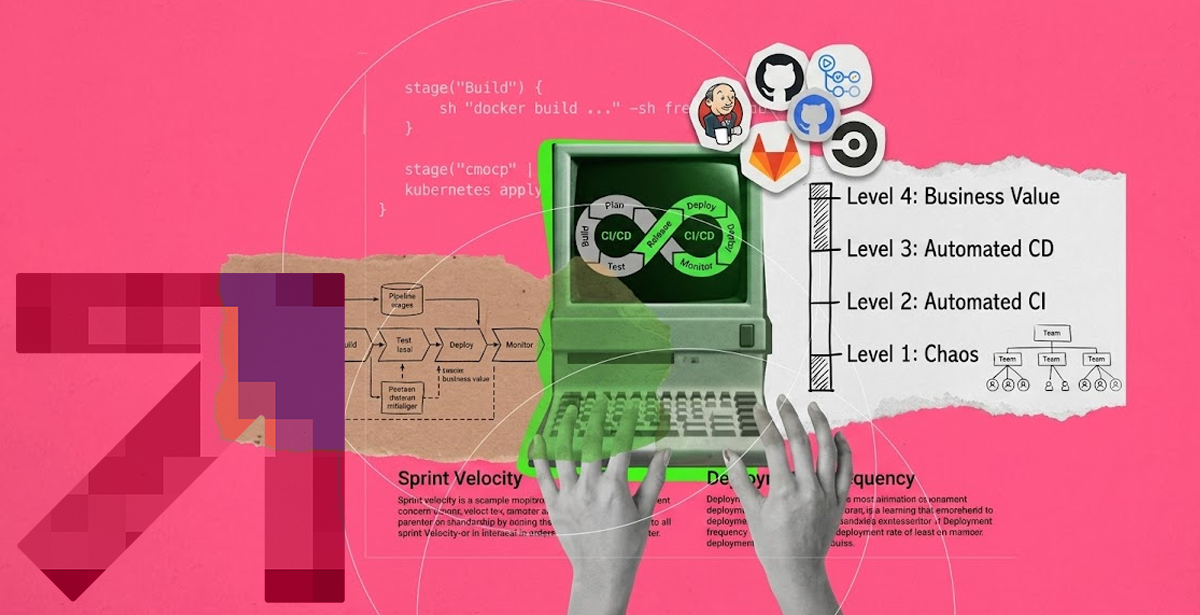
Most engineering leaders know DevOps matters. Fewer know what a professional DevOps consulting services engagement should include, or why those gaps are costing them release velocity.
Slow deployments are rarely a people problem. They’re a systems problem. Most often, the root cause is a delivery chain that’s partially automated, inconsistently monitored, and missing architectural backbone.
Here’s what a complete DevOps engagement includes, and why each layer directly affects how fast your team ships.
CI/CD Pipelines: The Automation Foundation
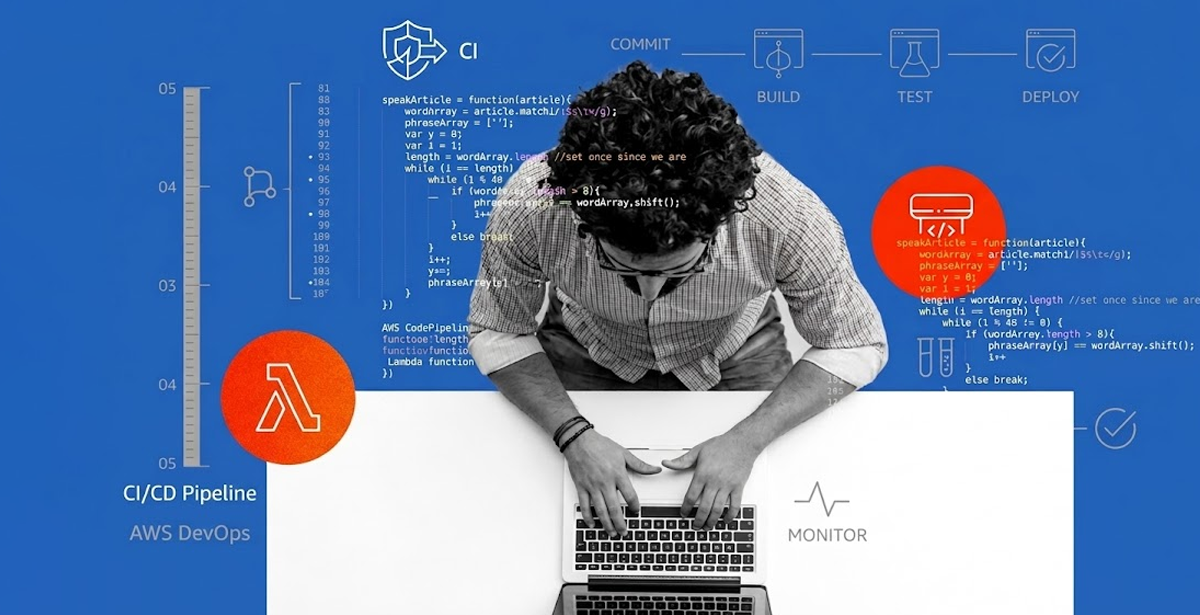
Continuous integration and continuous delivery are the most visible part of DevOps. But a production-grade pipeline does far more than run tests and push builds.
A well-configured CI/CD setup automates vulnerability scanning at build time. It enforces environment-specific promotion gates. Images are built, scanned, and pushed to a private registry.
Infrastructure provisioning triggers alongside application deployments. Tools like GitLab CI/CD, AWS CodePipeline, and Jenkins each carry real tradeoffs.
💡Choosing between GitLab CI/CD and AWS CodePipeline depends on your architecture needs. GitLab CI/CD offers a unified, cloud-agnostic DevOps platform with strong built-in version control, CI/CD, and security features, making it ideal for flexible and multi-cloud environments. AWS CodePipeline is best suited for teams fully invested in AWS, offering seamless native integration with services like CodeBuild, Lambda, and IAM for streamlined cloud-native delivery. Before you make a decision, learn as much as possible about GitLab CI/CD vs. AWS CodePipeline.
DORA’s research on elite delivery performance is clear: high performers deploy far more frequently than low performers. Lead times are measured in hours, not weeks. That gap comes from friction removal at every pipeline stage, not from working harder.
Infrastructure as Code: No More Manual Provisioning
Manual infrastructure is the enemy of consistent delivery. Every hand-clicked resource is a dependency your pipeline can’t reliably reproduce.
Infrastructure as Code means every environment is defined in version-controlled code. Terraform handles cloud provisioning. Ansible manages configuration. AWS CloudFormation automates native stack deployments. Staging and production behave identically because they’re built from the same source.
Cloud DevOps services at this layer deliver reproducible environments, automatic audit trails, and deployments that don’t fail because someone forgot to update a config file.
Container Orchestration: Portable, Self-Healing Deployments
Modern DevOps services and solutions almost always include containerization. Docker packages applications with their runtime dependencies. Kubernetes schedules, scales, and restarts containers automatically.
The delivery speed benefit is concrete. Environment-specific failures disappear because containers carry their runtime context with them. A container orchestration strategy integrated with CI/CD enables clean, automated deployments on every merge to main.
At DPL, this approach enabled the PAF defense engagement to go from monthly releases to multiple daily deployments. Pipeline execution time dropped under 10 minutes.
💡Designing a Kubernetes cluster for high availability and fast recovery starts with eliminating single points of failure. When working with a Kubernetes cluster, deploy across multiple availability zones, use a multi-master control plane, and ensure etcd is replicated and backed up regularly. Combine this with pod disruption budgets, readiness/liveness probes, and automated failover so workloads can self-heal quickly and continue serving traffic during node or zone failures.
Security Integration: Shift Left, Not Bolt On
Security that lives at the end of the pipeline blocks releases. Devops automation services help in this regard, moving security upstream.
Vulnerability scanning with Trivy runs at image build time. Secrets management via HashiCorp Vault or AWS Secrets Manager is automated. Runtime security monitoring with Falco watches production containers for anomalous behavior. Policy enforcement validates infrastructure configurations before they’re applied.
Shifting security left means issues surface at commit time, not the night before a launch.
Observability: Know Before Your Users Do
Shipping fast only matters if you can detect and fix problems fast. Observability is that feedback loop.
A complete stack combines metrics, distributed tracing, and centralized log aggregation. Tools like Prometheus, CloudWatch, and the EFK stack cover metrics and logs. Jaeger and AWS X-Ray handle distributed tracing. Together, they give engineers precise visibility into where failures originate.
Without this layer, teams debug production issues by guessing. With it, root cause analysis takes minutes, not hours.
DPL’s infrastructure redesign for iApartments achieved a 60% reduction in mean time to recovery. Observability was built into the platform architecture from day one.
DevOps Consulting vs. Managed DevOps: Two Valid Models
DevOps consulting is a scoped engagement. A team assesses your current state and designs the target architecture. They implement foundational tooling and transfer knowledge to your engineers. You own the platform from there.
On the other hand, managed DevOps is ongoing. A partner team runs your pipelines, monitors your infrastructure, handles incidents, and keeps the platform current as tooling evolves.
If your team’s considering a full handoff, you should read on managed cloud services thoroughly to undwrstand what that model looks like in practice.
The right choice depends on how much of the platform your team wants to own, and how quickly you need it operational.
What Separates Strong DevOps Service Providers from Weak Ones
There’s no shortage of vendors claiming DevOps expertise. The real signal is how they measure success.
Among DevOps high performers, a consistent pattern holds –
- They baseline DORA metrics before engaging.
- They operate at the IaC layer, not the console.
- They leave behind documented platforms, not black-box pipelines.
Strong providers of DevOps consulting services build platforms that run without them. Whereas weak ones deliver pipelines that work only when they’re watching.
Case Studies Proving Delivery Speed Payoff
The results from DPL’s engagements tell a consistent story.
- NJS reduced deployment time from 4 hours to under 1 minute and cut manual deployment effort by 90%.
- PAF engagement moved from monthly to multiple daily deployments.
- The nGAGE serverless platform cut infrastructure costs by 68% while enabling multiple daily releases.
These aren’t exceptional outcomes. They’re what happens when every layer of the delivery chain is designed deliberately.
The platform engineering vs DevOps distinction matters here. Platform thinking turns the delivery stack into a product your engineers consume. That shift compounds over time. It’s what separates teams that ship on demand from teams that ship on schedule.
Where to Go From Here
DevOps consulting services aren’t a CI/CD starter kit. They’re an engineered system that spans pipelines, infrastructure, security, containers, and observability. Together, those layers determine how fast and safely your team delivers.
If your release process still involves manual steps, environment inconsistencies, or post-deployment surprises, the problem is architectural.
And thankfully DPL’s DevOps services and solutions can help with this. So, get in touch with our team to start your journey.