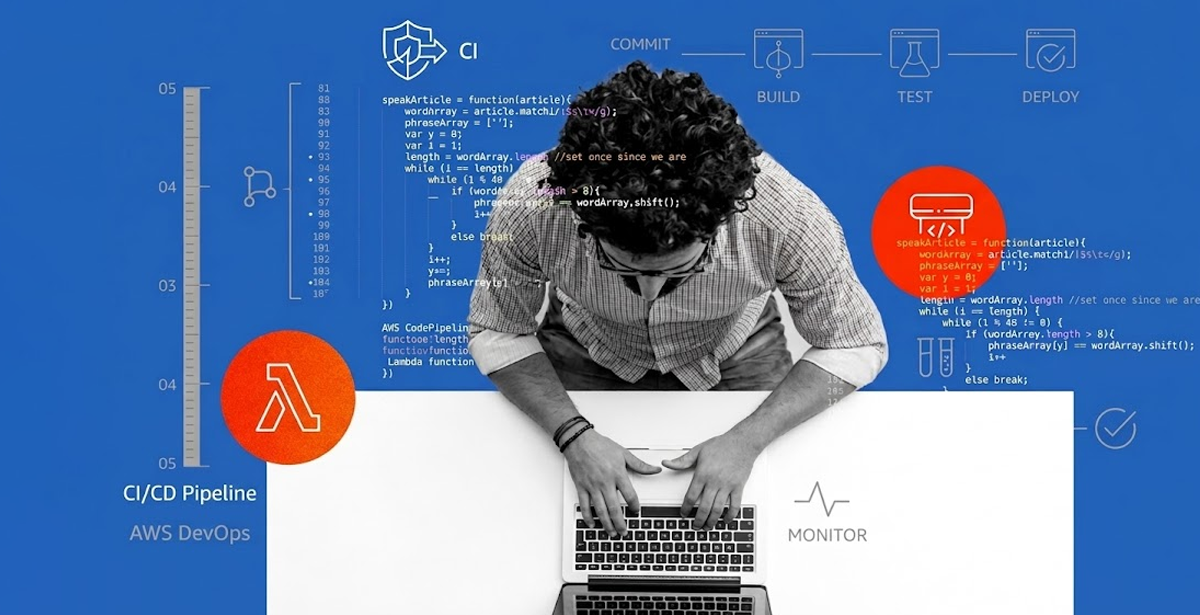
DevOps Managed Services: When Outsourcing Your Pipeline Is the Right Call


Most engineering leaders underestimate the true cost of running DevOps in-house. They account for salaries, but miss everything else: the on-call rotations, the tool licensing sprawl, and the institutional knowledge locked in two engineers who just got poached by a hyperscaler.
DevOps managed services solve a specific problem that internal teams struggle to articulate until they’re already inside it.
The Real Cost of Running DevOps In-House
Building internal DevOps capability isn’t just a hiring decision. It’s a compounding infrastructure commitment.
You need CI/CD engineers who understand your stack. You need them available at 2 AM when a deployment breaks. You need them keeping pace with every Kubernetes release, every AWS service update, every CVE in your container registry. And you need them not to leave.
According to the DORA State of DevOps research, elite-performing engineering organizations deploy multiple times daily with change failure rates below 5%. Getting there without dedicated expertise takes years. On the other hand, getting there with a DevOps service provider who has already walked that path takes weeks.
The question isn’t whether in-house DevOps is possible. It’s whether building it yourself is the highest-value use of your engineering capacity.
Five Signals It’s Time to Consider Managed DevOps
Not every organization needs to outsource. But five patterns consistently precede the decision.
1) Your deployments are slow and manual
If pushing to production takes more than 30 minutes and involves human steps, you’re operating below what modern pipelines can deliver. Continuous deployment done right brings deployment time under a minute with full automated rollback.
2) Your team is fighting fires instead of shipping
When your best engineers spend cycles on infrastructure incidents rather than product work, that’s a structural problem, not a staffing one.
3) You’re scaling faster than your ops can handle
Adding users or regions doesn’t break your application. It breaks the manual processes holding your infrastructure together.
4) Compliance requirements have outgrown your team’s expertise
SOC 2, HIPAA, GDPR — these require security controls embedded in your pipeline, your container runtime, and your cloud posture. That’s a specialized skill set.
5) Cloud costs are growing faster than usage
Unmanaged infrastructure drifts. Cloud consulting combined with managed pipelines typically pays for itself in rightsizing and reserved capacity optimization alone.
What DevOps as a Service Actually Covers
DevOps as a service isn’t a staffing arrangement. It’s an operational ownership model.
A mature engagement covers CI/CD pipeline design and maintenance, Infrastructure as Code with Terraform or CloudFormation, container orchestration on Kubernetes or ECS, security scanning in the pipeline (Trivy, Falco, GuardDuty), observability stacks (Prometheus, Grafana, EFK), and 24/7 incident response.
The distinction from a consulting arrangement is that the provider doesn’t hand off a runbook and leave. They own the pipeline. SLAs are measured, incidents are their problem, and your engineers ship features instead of managing the infrastructure underneath them.
According to AWS’s DevOps foundation guidance, the organizations that realize DevOps benefits fastest are those with clear operational ownership and automated feedback loops from deployment to monitoring. Managed DevOps builds that ownership model by design.
What DevOps Consulting Looks Like in Production
The abstract case gets concrete when you look at specific results.
For National Janitorial Solutions, DPL took a deployment process that required four hours and multiple manual steps, and reduced it to under one minute using Amazon ECS and AWS CodePipeline.
Manual deployment effort dropped by 90%. NJS achieved SOC 2 Type II certification, and the platform now processes 500,000-plus work orders annually at 99.95% availability with a recovery time objective under 15 minutes.
Another example is our air-gapped Kubernetes platform for the Pakistan Air Force with zero external internet connectivity, an on-premises CI/CD pipeline, and defense-grade runtime security using Falco and Istio mTLS. Deployments that previously happened monthly moved to multiple daily. Mean time to recovery dropped to under five minutes.
Both cases involve outsourcing DevOps operations to a team with the capability that would take years to build internally.
Choosing the Right DevOps Service Provider
Not all providers are the same. Three differentiators separate capable partners from commodity vendors.
1) Environments they have actually operated in
If your workload involves compliance, air-gapped infrastructure, multi-region failover, or regulated data, verify the provider has deployed in those environments. Ask for case studies, not sales decks.
2) Ownership model clarity
Ask directly: who responds to a 3 AM incident? What is the escalation path? What SLAs are contractually defined? A provider who hesitates here is a consultant, not a managed service.
3) Tool alignment, not tool replacement.
The best DevOps consulting partnerships work with your existing stack. Platform engineering and managed DevOps should meet your engineers where they are, not mandate a full toolchain migration before delivering value.
💡 Don’t confuse DevOps with Platform Engineering. DevOps is a set of practices focused on collaboration, automation, and faster delivery between development and operations, while Platform Engineering is the discipline of building reusable internal platforms and tooling that enable those DevOps practices at scale. In simple terms, DevOps is ‘the way teams work’, and Platform Engineering is ‘the system that makes that way sustainable and scalable’. Make sure to understand Platform Engineering vs DevOps to get the most value from service providers.
FAQ: DevOps Managed Services
What is included in DevOps Managed Services?
They typically include CI/CD pipeline setup, infrastructure as code (IaC), cloud management, monitoring and logging, security integration, and ongoing optimization of delivery workflows.
Will outsourcing DevOps mean losing control of our infrastructure?
Not if structured correctly. A managed DevOps engagement should provide full visibility via observability dashboards and audit logs. You own the infrastructure; the provider operates it. Contracts should define access levels, escalation rights, and data sovereignty explicitly.
Is managed DevOps right for startups, or only enterprises?
Both. Startups get production-grade infrastructure without building a dedicated ops team. Enterprises offload routine operations to free senior engineers for higher-leverage work. The economics look different, but the operational logic is the same.
How do managed services ensure system reliability?
They implement proactive monitoring, automated alerts, rollback mechanisms, and redundancy strategies to detect issues early and maintain high availability and performance.
Do managed DevOps services support cloud migration?
Yes. They assist with planning and executing cloud migrations, including workload assessment, architecture redesign, automated deployments, and post-migration optimization.
Outsource the Pipeline, Own the Outcome
The in-house DevOps argument holds until pipeline complexity, on-call burden, or compliance requirements outgrow your team’s capacity to absorb them.
At that point, DevOps managed services aren’t a cost line. They’re the mechanism that keeps deployment velocity competitive and infrastructure defensible.
DPL has built and operated pipelines for defense organizations, government platforms, IoT infrastructure, and enterprise SaaS, in environments ranging from public cloud to fully air-gapped. Explore DPL’s DevOps and managed cloud services to see what that looks like in practice.